LEARN ABOUT OUR INVESTMENT VEHICLES
Insights

Resource
Sponsor Spotlight: RD Advisors
youtube.com
Get to know RD Advisors in this interview with Sean Kelly-Rand, Managing Partner. Learn about their approach, strategy, and what sets them apart.
Resource
Sean Kelly-Rand shares insights on risk, capital structure, and today’s fragile real estate market
youtube.com
On The Alternative Investment Podcast, Sean Kelly-Rand shares lessons from his time at Lehman Brothers and explains how those experiences shaped RD Advisors’ disciplined, downside-focused approach to navigating today’s increasingly fragile real estate market.
LinkedIn
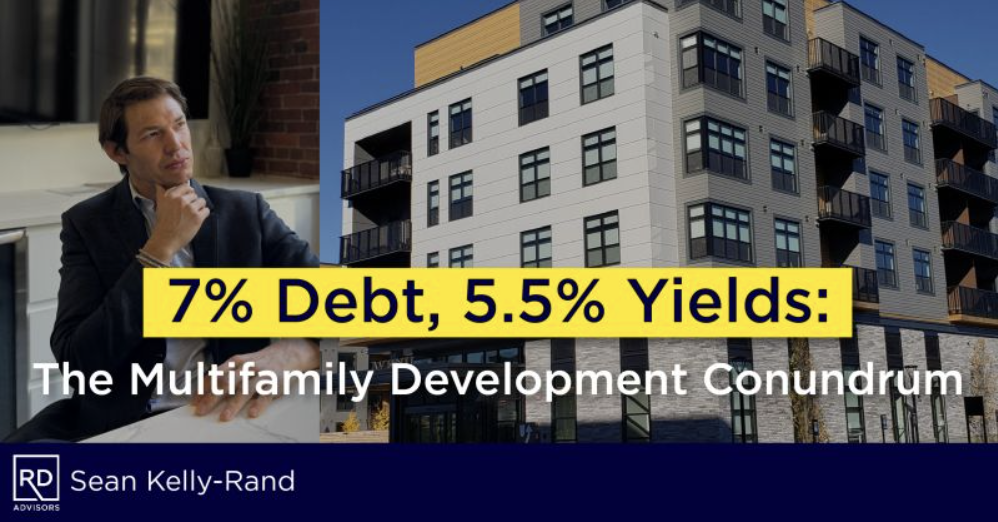
Billions of Multifamily development projects aren’t getting off the ground: Why?
Billions of Multifamily development projects aren’t getting off the ground: Why?The numbers don’t work. Period.Lenders won’t issue the financing for construction because today’s interest rates don’t allow for a refinance of the exit post-construction. Here is the math for a typical project I've seen:*Multifamily stick on podium (the 5 to 6 story stuff you see everywhere) costs roughly around $400,000 per 2 bed unit to develop (c. $300psf-$450psf) in the Northeast.*Rents typically range from $3000 to $4500 per month*Expenses are 30%-35% of rents*Therefore income is ~$25,000 unit/yrIncome typically must cover debt financing costs by 1.2x so ~$20,000 can be used for interest payments = at 7% rates a developer is capped at borrowing about $300,000/unit towards construction, i.e. only 70% of the construction costs!That doesn’t include land. Nor the holding costs. Nor the developer's fees/cost. Nor the interest cost during construction. And certainly not the cost of capital to investors. Furthermore, the land has a value: the development profit has to be greater than the next best alternative use (parking, retail, an existing property… etc…).So how does a municipality make development work? Subsidies? That’s why affordable housing projects can still proceed. Or higher rents: i.e. $5000+ rents for 2 beds. However, if municipalities are requiring 20% affordable housing it brings average rents back down to the $4,000 range, so again projects don’t pencil. The bigger issue is developers don’t want to start permitting projects they know don’t pencil. So, even if rates and construction costs fall, zoning and affordability requirements will mean developers won’t start the process for future projects as there is too much uncertainty.Post is in response to planning board member Chris Gittins' request to understand the financial considerations of multifamily/mixed-use developments (thank you). And Scott Bailey’s request to make it a post. I welcome any of the multifamily development pros to opine as well.And, none of this is investment advice, just my personal observations on the topic. Follow Sean Kelly-Rand on LinkedIn

Resource
Breaking New Ground: Sean Kelly-Rand. Providing Capital and Efficiency in Real Estate Financing
youtube.com
On the Breaking New Ground podcast, Sean Kelly-Rand discusses RD Advisors’ approach to private real estate debt, market opportunities, and how disciplined lending can uncover value amid shifting economic cycles.
.png)
LinkedIn
I turned down Goldman Sachs for Lehman Brothers, and fifteen years on still have no regrets.
I turned down Goldman Sachs for Lehman Brothers, and fifteen years on still have no regrets.And, fifteen years on from the bankruptcy, I still have no regrets turning down Goldman to join Lehman’s Global Real Estate Group. Goldman are leaders and winners in Global Investment Banking, but that doesn’t take away from what Lehman was or is. As soon as I received the call from Lehman with the offer, I called Goldman and let them know that I would not be joining them (even their travel team was shocked).Lehman had a reputation that reflected who I was: an underdog, scrappy, hardworking, hustler, and less-aristocracy and more blue collar (less arrogant). Above all, they were known as the ‘nice guys on Wall Street’.Lehman was the undisputed Bond King of Wall Street, and, if you wanted to be in real estate it was all about the debt capital markets. The real estate group ran Lehman. I’d still argue that it was Lehman’s stretch into the equity markets that brought the bank down. And, as Barry Sternlicht frequently recommends, you should go where the action is. In the 2000’s, one can argue there was no better place than Lehman’s real estate group. My small team alone closed billions a year of debt and equity transactions, including the MetLife/PanAm tower in NYC, Archstone Residential, John Hancock in Boston, Coeur Defense Towers in Paris, and Devonshire House in London, among many others. If JMB was the place to be in real estate in the 80’s, Lehman was the place to be in the 2000’s.If I wanted a corporate banking or government career, Goldman clearly would have been a better choice. That’s not me though. I sought out an entrepreneurial career in real estate.And, a decade and a half later I run a rapidly growing real estate private credit business. We’re still underdogs, we’re still hustlers, and we are still the nice guys on the Street. I wouldn’t have it any other way.Follow Sean Kelly-Rand on LinkedIn
Resource
Sponsor Spotlight: Get to Know RD Advisors
youtube.com
RD Advisors' Partner Sean Kelly-Rand sat down with Thomas James of the CrowdStreet team and answered some of the frequently asked Investors questions.
Press and Speaking Engagements

Press
The Music Has Stopped For Once-Booming Real Estate Crowdfunding Platforms
bisnow.com
Once-booming real estate crowdfunding platforms are now teetering on the edge, with deal flow drying up, capital calls rising, and many earlier backers facing heavy losses.

Press
MassHousing Announces $5 Million in CommonWealth Builder Funding to Create 18 New Homes for Purchase by Moderate-Income, First-Time Homebuyers in Fall River
masshousing.com
McPherson Development LLC is developing the St. Louis Schoolhouse Condominiums at a former elementary school property.

Press
New Real Estate Debt Fund Set To Launch This Week
finance.yahoo.com
A new real-estate debt fund is being launched to capitalize on distressed opportunities in the property sector amid growing credit stress — positioning itself as a bridge financier in turbulent markets.
Press
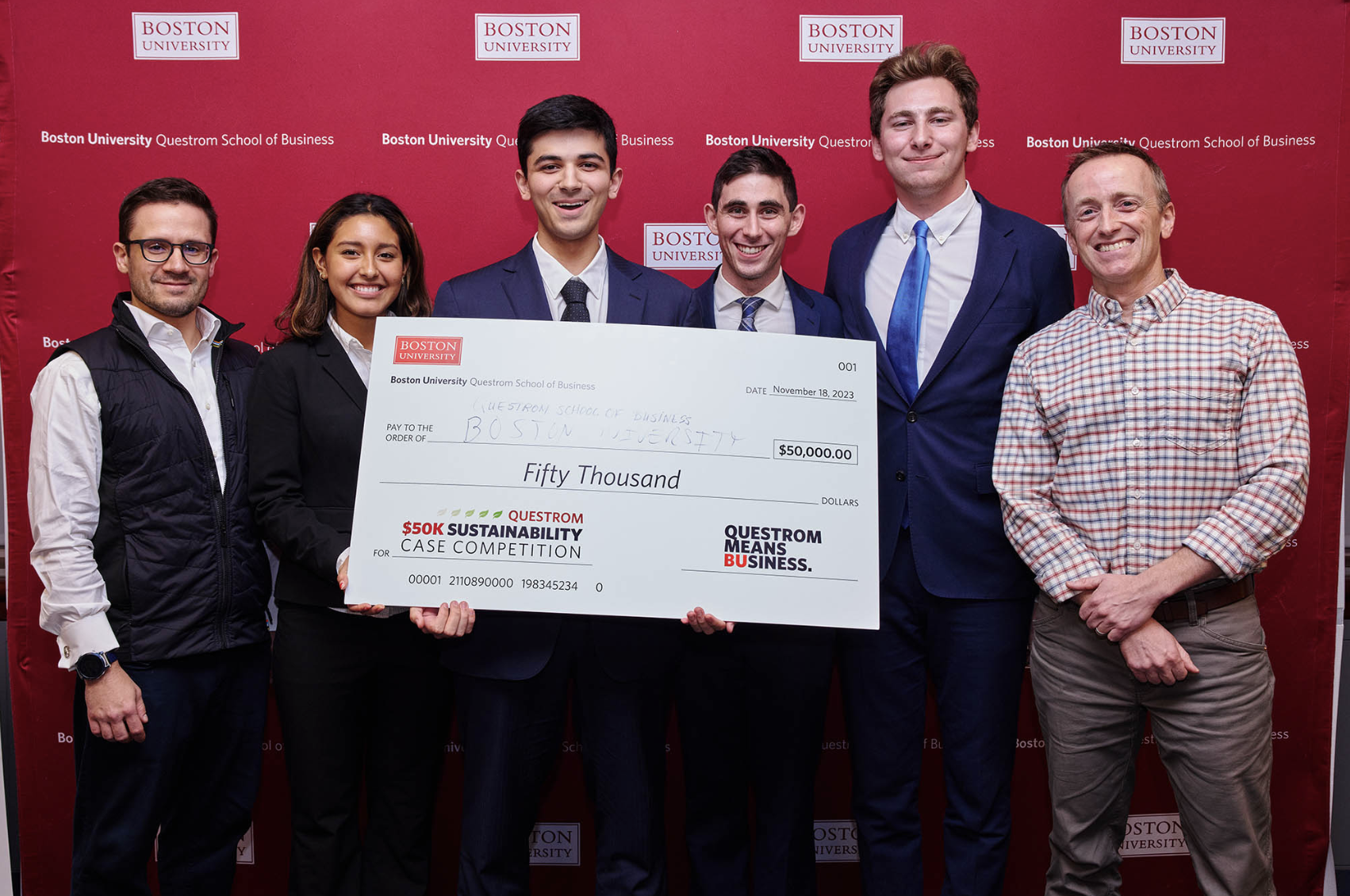
BU Students Win $50,000 for Helping L.L.Bean Become More Eco-Friendly
bu.edu
A team of BU students won $50,000 and professional support through the Questrom Sustainability Competition by proposing ReBean, an eco-friendly resale platform to help L.L. Bean reduce waste and appeal to sustainability-minded buyers.

Press
thepitchboard.com
Sean Kelly-Rand discusses RD’s Real Estate Debt Fund II LP—its strategy, structure, and disciplined approach to generating strong returns through private real estate credit.

Resource
youtube.com
Managing Partner Sean Kelly-Rand was recently invited to speak at SuperReturn North America.